 |
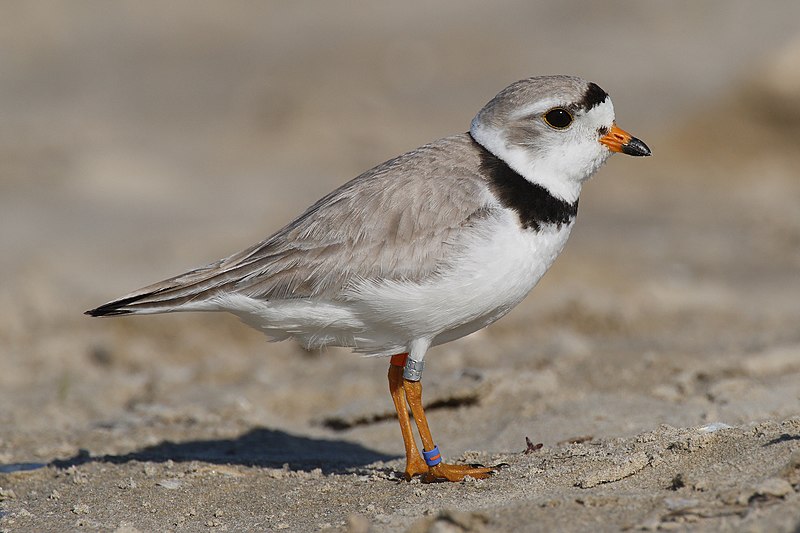
The Atlantic Piping Plover: one of the many species
recovering thanks to the Endangered Species Act. |
Last year, The Endangered Species Act (ESA) took a high
profile criticism from Doc Hastings, chairman of the Committee on Natural
Resources of the US House of Representatives. Hastings asserted that the act is a failure because
relatively few species have been removed from the endangered list:
“The
purpose of the ESA is to recover endangered species — yet this is where the
current law is failing — and failing badly. Of the species listed under the ESA
in the past 38 years, only 20 have been declared recovered. That’s a 1 percent
recovery rate.” [The 1% figure can still be found on the Congressman’s
website.]
Is that so? What should the recovery rate be?
In response to criticisms like this, this past May, the
Center for Biological Diversity produced a 16-page report,
On Time, On Target:
How the Endangered Species Act is Saving America’s Wildlife. Authors Kieran
Suckling, Noah Greenwald and Tierra Curry compared the
actual recovery
rate of 110 species on the list with the
projected rate specified in
their federal recovery plans. They found that the ESA has a strong success
rate: 91% of species are recovering at the rate specified by their federal
plans. Further, recovery takes time. The majority of species have not been
listed long enough to warrant an expectation of recovery. Eighty percent of
species have not yet reached their expected recovery year. On average, these
species have been listed for just 32 years, while their recovery plans required
46 years of listing. For example, the
Florida
panther has been listed for 38 years but its expected recovery time is 113
years, so it’s not project for delisting until 2085.
Another important success is that 21 species have recorded
population boosts of more than 1000 percent in time periods ranging from seven
to forty-four years. These include El Segundo blue butterfly (population
increase of 22,000% in 27 years), Kemp’s ridley sea turtle (19,800% increase in
32 years), California
least tern (2819% increase in 40 years), American crocodile (1290% increase in
32 years) and the Whooping crane (1009% increase in 44 years). Sounds pretty
good to me.

Many other species have increased to populations near the
recovery goals established in their recovery plans, such as the Atlantic piping
plover (though strangely, the Canadian population is not seeing the same
increase in nesting pairs). Piping plover populations plummeted due to
over-hunting and the millinery trade in the 19th century. When these
were eliminated, their numbers began to rise early in the 20th century,
only to take another hit due to development and increased beach use by humans. Even
if piping plovers are delisted in the next couple of years, they will still
need our vigilance and protection on coastal beaches and nesting sites to make
sure the population remains healthy.
An additional success is that 12 species are in the
process of being downlisted (e.g. from critically endangered to threatened) or
delisted altogether in the next five years. These include the Steller sea lion,
Grizzly bear, Virgin Islands tree boa, Wood stork and California least tern.
So, the criticism is completely without scientific basis. Find
out more about the many Endangered Species Act successes
here. The site also contains other
goodies where
you can browse regions and find out more
about endangered species around the country. You can also search by species
groups (taxa) or from an alphabetical list. Look at the data. Get to know these species.


