Showing posts with label conservation. Show all posts

Wednesday, June 26, 2013

Obama and Climate Change -- What about Conservation?

President Obama, climate change, biodiversity crisis
Obama's Climate Speech (Reuters)

Yesterday, President Obama finally addressed the problem of climate change in a 45-minute speech at Georgetown University in Washington DC. He began with an impressive summary of the facts of climate change, calling carbon “pollution”, stating that twelve of the last fifteen years have been the warmest on record, that arctic ice has diminished to its smallest size on record and that the ocean temperatures have reached record highs. He also mentioned last week’s heat wave in Alaska and the drought and heavy rains of the Midwest.
            From there, he discussed how these effects have costs for all of us and said that, because the science was sound, we had to act. He wondered if we had the courage to act before it’s too late.
            To his credit, he proposed limits on pollution from power plants and mentioned ending fossil fuel subsidies. However, though he still did not come out against the Keystone Pipeline and instead left himself some wiggle room, saying that it would only be approved if it was in the nation’s best interests.
            It was a speech that was heavy on new technologies, as if renewable energies can solve our problems. Unfortunately, though he talked about using energy more efficiently and wasting less energy, he made no mention of actually using less energy, which also needs to be part of the solution. If we’re to transition off fossil fuels to 100% renewables, we simply can’t keep consuming energy the way we have been. Either that, or we’ll have to give up pristine wilderness and public lands for wind farms. I’m all for wind power, but not at any cost.
            Factoring consumption into the equation is also important to bring home the message that we are over-consuming the environment. One of the main causes of species loss is habitat destruction, usually from land converted to agriculture (typically cattle). In fact, if we developed a silver bullet and solved our energy problems tomorrow, we would still have the biodiversity crisis to solve.
            Obama said, “We all share a responsibility for keeping the planet habitable,” and this means we’re going to need to do more than transfer to renewable energies. We have to examine our entire environmental footprint and reduce it.

See the complete transcript of Obama's speech here, and a discussion of the impacts of climate change on biodiversity here. 

Friday, July 6, 2012

Stunning footage of the endangered Cross River Gorilla

camera trap, Cross River gorilla, what are endangered species, Wildlife Conservation Society
Chest-Thumping Cross River gorilla, caught by hidden camera trap. 


Now that cameras have gone digital, one of the greatest boons has been for wildlife camera traps. Like a hidden camera, these "traps" can unobtrusively photograph or video whichever the creatures happen to walk by. Last year, Jeremy Hance reported for the Guardian about the impact these cameras were having on conservation efforts.

In May, the video camera trap scored one of its greatest victories. Placed in Cameroon's Kagwene Gorilla Sanctuary, the trap picked up eight Cross River gorillas making their way along a forest path. The sanctuary was established in 2008 for the sole purpose of protecting these gorillas, among our closest living relatives, rarely seen by humans and never videotaped, until now. There are only about 250 Cross River gorillas left due to habitat loss and hunting for bushmeat. The footage was captured by the Wildlife Conservation Society and gives us a rare glimpse of a hidden world. Kudos to them for this spectacular footage.


You can read more about conservation efforts for the Cross River Gorilla here.

----


Technorati claim token: AANC4R88CA6W

Monday, July 2, 2012

Endangered Species Act Success Stories


piping plover, Endangered Species Act, Doc Hastings, Center for Biological Diversity
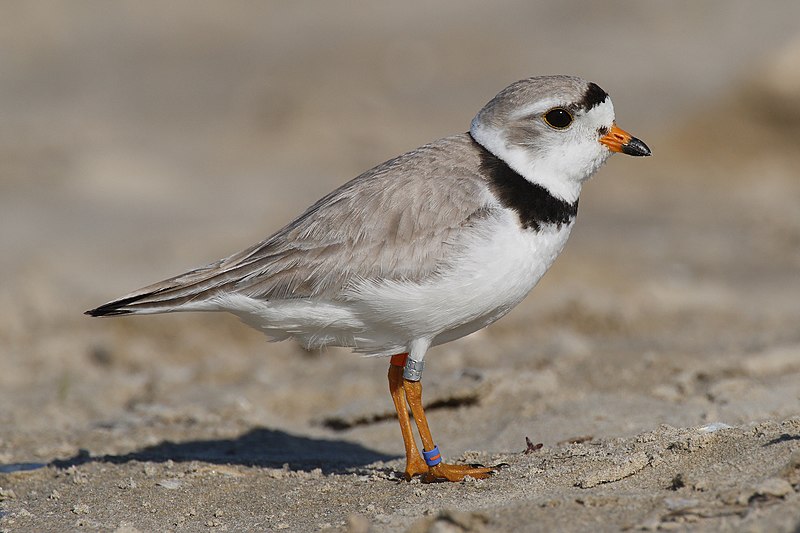
The Atlantic Piping Plover: one of the many species
recovering thanks to the Endangered Species Act.

Last year, The Endangered Species Act (ESA) took a high profile criticism from Doc Hastings, chairman of the Committee on Natural Resources of the US House of Representatives. Hastings asserted that the act is a failure because relatively few species have been removed from the endangered list:

“The purpose of the ESA is to recover endangered species — yet this is where the current law is failing — and failing badly. Of the species listed under the ESA in the past 38 years, only 20 have been declared recovered. That’s a 1 percent recovery rate.” [The 1% figure can still be found on the Congressman’s website.]

Is that so? What should the recovery rate be?

In response to criticisms like this, this past May, the Center for Biological Diversity produced a 16-page report, On Time, On Target: How the Endangered Species Act is Saving America’s Wildlife. Authors Kieran Suckling, Noah Greenwald and Tierra Curry compared the actual recovery rate of 110 species on the list with the projected rate specified in their federal recovery plans. They found that the ESA has a strong success rate: 91% of species are recovering at the rate specified by their federal plans. Further, recovery takes time. The majority of species have not been listed long enough to warrant an expectation of recovery. Eighty percent of species have not yet reached their expected recovery year. On average, these species have been listed for just 32 years, while their recovery plans required 46 years of listing. For example, the Florida panther has been listed for 38 years but its expected recovery time is 113 years, so it’s not project for delisting until 2085.

Another important success is that 21 species have recorded population boosts of more than 1000 percent in time periods ranging from seven to forty-four years. These include El Segundo blue butterfly (population increase of 22,000% in 27 years), Kemp’s ridley sea turtle (19,800% increase in 32 years), California least tern (2819% increase in 40 years), American crocodile (1290% increase in 32 years) and the Whooping crane (1009% increase in 44 years). Sounds pretty good to me.

piping plover, Center for Biological Diversity, Endangered Species Act, Doc Hastings 
Many other species have increased to populations near the recovery goals established in their recovery plans, such as the Atlantic piping plover (though strangely, the Canadian population is not seeing the same increase in nesting pairs). Piping plover populations plummeted due to over-hunting and the millinery trade in the 19th century. When these were eliminated, their numbers began to rise early in the 20th century, only to take another hit due to development and increased beach use by humans. Even if piping plovers are delisted in the next couple of years, they will still need our vigilance and protection on coastal beaches and nesting sites to make sure the population remains healthy.

An additional success is that 12 species are in the process of being downlisted (e.g. from critically endangered to threatened) or delisted altogether in the next five years. These include the Steller sea lion, Grizzly bear, Virgin Islands tree boa, Wood stork and California least tern.

So, the criticism is completely without scientific basis. Find out more about the many Endangered Species Act successes here. The site also contains other goodies where you can browse regions and find out more about endangered species around the country. You can also search by species groups (taxa) or from an alphabetical list. Look at the data. Get to know these species. 

Sunday, April 24, 2011

Great WWF Ads

World Wildlife Fund, WWF, biodiversity, endangered species, environmental awareness, environmental ads
You’ve got to hand it to the World Wildlife Fund for the creativity in their ads. Here’s a compilation of 55 compelling and provocative ads. Feel free to leave a comment about your favorites. I personally like the forest/lungs, the ghost tiger images and, for sheer provocation, both the child in the tiger suit and the soon-to-be consumed baby.

Saturday, March 5, 2011

Brazilian Conserve Water Ad Campaign

A little creativity goes a long way... though I doubt we'll see this anytime soon in North America.

Watch this ad for Brazil's Save Water campaign once...


then watch it again with the translation below:
To sum it up: If you pee, you're invited.
(when you flush you waste up to 12 liters of drinkable water / 4380 liters in one year)
Pee in the bath! Help the Atlantic Forest.
Pee in the shower! We want everyone to do it!
Men! Women! Children! Brazilians! Or not! Nobles! Commoners! Musicians! Sports stars! People half-human, half-monster. Twilight creatures! Brazilian legends! Greek legends! Good people! Not so good people! Art geniuses! Science geniuses! Circus performers! Lovers! People from other planets! Movie stars!

In case you're wondering, urine is 75% water and sterile, so go ahead, and call it
conservation by urination.