Showing posts with label endangered species act. Show all posts

Monday, July 9, 2012

Getting to Know your Endangered Species


I recently wrote about the Endangered Species Act's success stories. The main finding was that out of 110 species sampled, 91% were recovering at the rate projected by their federal recovery plans. Good news. Now the US Fish and Wildlife Service has produced an interactive map so that you can check up on endangered species in your state. This is a great way to tour the biodiversity present in the fifty states as well as the Virgin Islands and Puerto Rico.

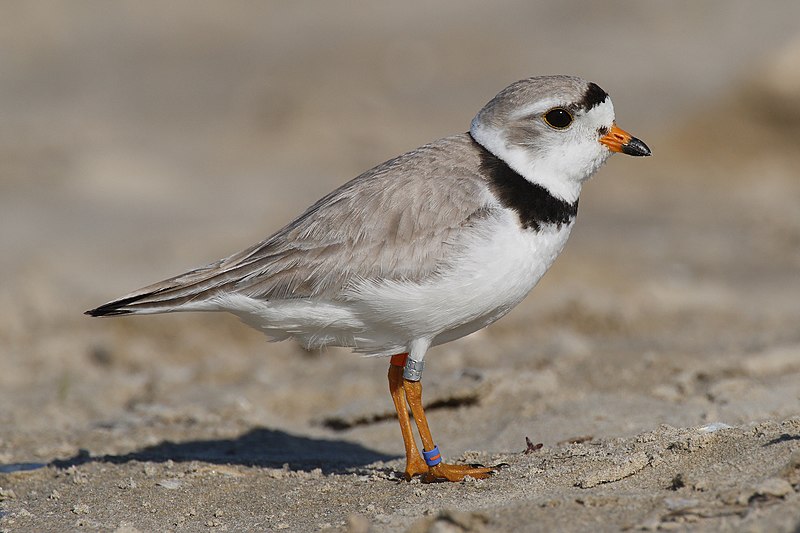
In Massachusetts, you can hear about what's being done to protect the adorable little shore bird, the Atlantic piping plover, pictured below.
piping plover, endangered species, USFWS

You can also read about what's being done for the New England cottontail.

In Texas, you can read and hear about one of the most endangered bird in North America, the whooping crane, whose recovery efforts have now gone on for decades. 


In Puerto Rico, check out what's being done for the Puerto Rican parrot, one of the world's most endangered parrots: 

Awareness and education is the first step to saving endangered species. Just click on the map and find out about endangered species in your state, next door, or across the country. 


Monday, July 2, 2012

Endangered Species Act Success Stories


piping plover, Endangered Species Act, Doc Hastings, Center for Biological Diversity
The Atlantic Piping Plover: one of the many species
recovering thanks to the Endangered Species Act.

Last year, The Endangered Species Act (ESA) took a high profile criticism from Doc Hastings, chairman of the Committee on Natural Resources of the US House of Representatives. Hastings asserted that the act is a failure because relatively few species have been removed from the endangered list:

“The purpose of the ESA is to recover endangered species — yet this is where the current law is failing — and failing badly. Of the species listed under the ESA in the past 38 years, only 20 have been declared recovered. That’s a 1 percent recovery rate.” [The 1% figure can still be found on the Congressman’s website.]

Is that so? What should the recovery rate be?

In response to criticisms like this, this past May, the Center for Biological Diversity produced a 16-page report, On Time, On Target: How the Endangered Species Act is Saving America’s Wildlife. Authors Kieran Suckling, Noah Greenwald and Tierra Curry compared the actual recovery rate of 110 species on the list with the projected rate specified in their federal recovery plans. They found that the ESA has a strong success rate: 91% of species are recovering at the rate specified by their federal plans. Further, recovery takes time. The majority of species have not been listed long enough to warrant an expectation of recovery. Eighty percent of species have not yet reached their expected recovery year. On average, these species have been listed for just 32 years, while their recovery plans required 46 years of listing. For example, the Florida panther has been listed for 38 years but its expected recovery time is 113 years, so it’s not project for delisting until 2085.

Another important success is that 21 species have recorded population boosts of more than 1000 percent in time periods ranging from seven to forty-four years. These include El Segundo blue butterfly (population increase of 22,000% in 27 years), Kemp’s ridley sea turtle (19,800% increase in 32 years), California least tern (2819% increase in 40 years), American crocodile (1290% increase in 32 years) and the Whooping crane (1009% increase in 44 years). Sounds pretty good to me.

piping plover, Center for Biological Diversity, Endangered Species Act, Doc Hastings 
Many other species have increased to populations near the recovery goals established in their recovery plans, such as the Atlantic piping plover (though strangely, the Canadian population is not seeing the same increase in nesting pairs). Piping plover populations plummeted due to over-hunting and the millinery trade in the 19th century. When these were eliminated, their numbers began to rise early in the 20th century, only to take another hit due to development and increased beach use by humans. Even if piping plovers are delisted in the next couple of years, they will still need our vigilance and protection on coastal beaches and nesting sites to make sure the population remains healthy.

An additional success is that 12 species are in the process of being downlisted (e.g. from critically endangered to threatened) or delisted altogether in the next five years. These include the Steller sea lion, Grizzly bear, Virgin Islands tree boa, Wood stork and California least tern.

So, the criticism is completely without scientific basis. Find out more about the many Endangered Species Act successes here. The site also contains other goodies where you can browse regions and find out more about endangered species around the country. You can also search by species groups (taxa) or from an alphabetical list. Look at the data. Get to know these species. 

Tuesday, March 22, 2011

The Last Lions


Imagine Africa without lions. Unthinkable. It's like imagining the ocean without whales, the arctic without polar bears, or the Antarctic without penguins. Sadly, this could become a reality. Though the lion is not listed as endangered yet, its numbers are plummeting rapidly enough to cause alarm. In the past century, the lion population has decreased from about 100,000 to around 23,000. (Some estimates have the lion population as high as 400,000 a century ago, and up to 40,000 today.) They have already become extinct in 26 countries and have a population of greater than 1000 in only 7 countries.

This month, several wildlife conservation groups, including the International Fund for Animal Welfare and Born Free USA petitioned the US Fish and Wildlife Service to have the lion listed under the Endangered Species Act. But wait. Lions don't live in the US, they live in Africa -- how could they be listed in the USA?

Answer: the groups leading the petition point out that between 1999 and 2008, Americans imported 4,021 lion trophies. In fact, this country is the largest importer of lion trophies and lion parts in the world. Placing lions on the endangered species list would prohibit the import of lion trophies. Though lions are also suffering from the typical problems threatening species today -- habitat destruction due to human encroachment and clearing land for agriculture -- halting the lion hunt would clearly help their situation. The US could then become a leader in protecting lions, though here are no wild lions in this country.

If you want to see lions in action, catch the National Geographic feature film, The Last Lions, now in theatres. It aint The Lion King, that's for sure. In the film, Ma Di Tao, the mother of three cubs, loses her mate and must protect and raise her cubs herself. The cineamatographers got some riveting footage of Africa at its wildest as we watch a compelling and suspenseful narrative unfold. Between asking myself how on Earth they captured these amazing scenes, I was always wondering what was going to happen next. As another reviewer said, this is definitely nature red tooth and claw. Though there's some anthropomorphizing in the narration (Jeremy Irons), and I could have done without the flashbacks and the slo-mo, the drama overcomes these minor quibbles.

There's a note in the credits about how you can cause an uproar to protect lions and I have to say, the items are rather minimal. Donate a few bucks here, share the story, etc. I hope they update the items to say that we should pressure the US Fish and Wildlife Service to list lions on the Endangered Species Act. Now that would be causing an upoar.