Showing posts with label invasive species. Show all posts

Sunday, May 26, 2013

Why We Marched Against Monsanto -- and Why We Need to Keep Up the Pressure

March Against Monsanto, GMO

Monsanto is a large multinational corporation originally founded as a chemical company but has now transformed into a mega-industrial agribusiness biotechnology company. They are the makers of a dozen health-and-environment damaging chemicals such as Agent Orange, which was heavily used in the Vietnam War, DDT, and Roundup (glyphosate), the most popular herbicide in the US today. They are also a leader in producing genetically modified (GM) seed, whose long health effects when consumed as genetically modified organism (GMO) crops are still uncertain (several studies have indicated deleterious health effects on lab animals). 
GMO labelling, Monsanto
Franken-corn advocating for GMO labelling
The March Against Monsanto on May 25 was organized for several reasons and these boil down to protecting our health, our food supply and our democracy: 

  • Research studies have shown that Monsanto’s genetically-modified foods can lead to serious health conditions such as the development of cancer tumors, infertility and birth defects.
  • In the United States, the FDA, the agency tasked with ensuring food safety for the population, is steered by ex-Monsanto executives, and we feel that’s a questionable conflict of interests and explains the lack of government-led research on the long-term effects of GM products.
  • Recently, the U.S. Congress and president collectively passed the nicknamed “Monsanto Protection Act” that, among other things, bans courts from halting the sale of Monsanto’s genetically-modified seeds.
  • For too long, Monsanto has been the benefactor of corporate subsidies and political favoritism. Organic and small farmers suffer losses while Monsanto continues to forge its monopoly over the world’s food supply, including exclusive patenting rights over seeds and genetic makeup.
Monsanto's GM seeds are harmful to the environment; for example, scientists have indicated they have contributed to Colony Collapse Disorder among the world's bee population.
Monsanto, GMOs, Colony Collapse Disorder
The Bee Lady spreading awareness about GMOs
While I support research on GMOs in controlled lab situations, I do not support their widespread use in our food chain. Numbers from the Non-GMO project indicate that a massive health experiment is already underway and we are the guinea pigs: 
  • Alfalfa (first planting 2011)
  • Canola (approx. 90% of U.S. crop)
  • Corn (approx. 88% of U.S. crop in 2011)
  • Cotton (approx. 90% of U.S. crop in 2011)
  • Papaya (most of Hawaiian crop; approximately 988 acres)
  • Soy (approx. 94% of U.S. crop in 2011)
  • Sugar Beets (approx. 95% of U.S. crop in 2010)
  • Zucchini and Yellow Summer Squash (approx. 25,000 acres) [according to Wikipedia, this is 13% of the crop]
The danger I see with long-term and uncontrolled use of GMOs is that we don't have any long term studies to support whatever short-term benefits may exist. I see the problem as similar to invasive species. Sometimes a species is introduced into a new environment to act as a predator for another species, which has been deemed a pest. More often than not, the introduced species becomes a problem itself because it proliferates without a natural predator to keep it in check and the entire ecosystem is soon disrupted. Whether these invasions are deliberate or accidental, the costs to ecosystems -- and those of us who rely on them -- is enormous. Massachusetts is presently fighting to keep the Asian Longhorn beetle under control. Like invasive species, GMOs are a "genie out of the bottle" phenomenon and if we want to protect our food supply from unforeseen consequences in the long term, we have to begin protecting it now.  

GMO's, labelling, Monsanto
Poet and publisher Gloria Mindock advocating against GMOs and Monsanto 

The March Against Monsanto organizers advocate several solutions:

  • Voting with your dollar by buying organic and boycotting Monsanto-owned companies that use GMOs in their products.
  • Labeling of GMOs so that consumers can make those informed decisions easier.
  • Repealing relevant provisions of the US's "Monsanto Protection Act."
  • Calling for further scientific research on the health effects of GMOs.
  • Holding Monsanto executives and Monsanto-supporting politicians accountable through direct communication, grassroots journalism, social media, etc.
  • Continuing to inform the public about Monsanto's secrets.
  • Taking to the streets to show the world and Monsanto that we won't take these injustices quietly.
Ultimately, as Vandana Shiva says, the March was inspired by the love for freedom and democracy, the love for the Earth, the soil, the seed. However, we also marched, a la Jon Stewart's from sheer exasperation at the threats that Monsanto's increasing dominance holds for our future well-being.

The state of Massachusetts is holding public hearings about GMO labelling coming up on June 3 and June 11. Come out to express your love for the soil and seed, your concern and your exasperation for our future well-being. 
Monsanto, GMO labelling


  After all, if now now, when, and if not us, who? 


Friday, July 20, 2012

How water chestnuts are taking over the northeast: a photo-essay

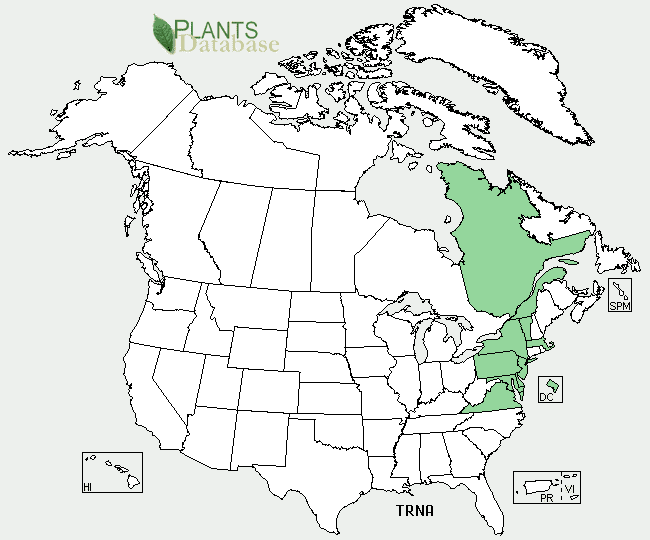
The five main causes of biodiversity loss are habitat destruction, over-exploitation, introduction of invasive species, pollution and climate change. Here we look at invasive species in our own backyard, particularly the water chestnut. Water chestnuts are native to Europe, Asia and tropical Africa; in Asia it is cultivated and the fruit is eaten, though this is NOT the water chestnut of Asian cooking. It was brought to the US in the late 1800s as a showy botanical specimen and later escaped to become a noxious aquatic invader. It is now present in all the northeast coast states as well as the Canadian province of Quebec.

map of water chestnut range in North America
Present range of water chestnuts

water chestnut and seed

It has submerged leaves that are feather-like in appearance, and a hard, barbed nut that will pierce your foot if you happen to step on it with bare feet. 
water chestnut seeds

The plant can produce 15 nuts per season and these sink to the bottom of the river or lake and can remain viable for up to twelve years. Impressive biological engineering there. The plants cluster together forming dense mats that can deplete oxygen levels, effectively starving out the native species, and hinder navigation. 
And we do mean hinder. Here's how water chestnuts have taken over Tonawanda Creek in Buffalo:
water chestnuts on river in Buffalo

Here's Swan Lake in New York, before last year's restoration efforts: 
water chestnuts on Swan Lake, NY

And here it is on Boston's own Charles River, in the "Lake District" around Newton. 
water chestnuts on the  Charles River

In the late 1990s, the Lakes District of the Charles River faced a water chestnut problem comparable to today's. The state spent over $600,000 over five years and nearly eradicated the problem through a mechanical harvesting program before the money ran out. The few remaining plants rapidly recolonized the region and by 2011 had covered nearly 70 acres. The current restoration plan, spearheaded by the Charles River Watershed Association, is to get a bunch of volunteers together and go out in canoes and pull the water chestnuts by hand. 
invasive species, water chestnuts, charles river
On our way to remove water chestnuts
I participated with a volunteer Meetup tonight (see our group photo!) and I can tell you that that section of the river is spectacularly beautiful. Though interstates I-95 and I-90 are nearby, they are too far away to hear and the placid waters here seem like a world apart, with ducks, frogs and herons all sighted as we paddled to our destination.
a basket of water chestnuts

You grab the rosettes and then pull slowly so that the roots come out without breaking. Sometimes you get enormous clumps. Sometimes the roots break. It's almost a zen thing -- how slowly but firmly can you pull so that the root stays intact? 

Our canoe did pretty good. We hauled in 19 baskets in just over two hours. So far this summer, 19,000 lbs of water chestnuts have been hauled in! Unfortunately, it looks like we barely made a dent and I fear that next year, the channels we canoed through will be matted over with water chestnuts. 

In just over a week's time, the water chestnuts will be dropping their seeds and the removal season will be over, so if you want to help out before then, get in touch with the water chestnut coordinator or call 781-788-0007 x235 to sign up for a date (groups and private events welcome -- everything is provided except your time and energy!)

a volunteer with a handful of water chestnuts
A volunteer with a handful of water chestnuts
You can find out additional information about this invasive weed and the plan to restore the Lakes District here. The CRWA has prepared an informative brochure and the state of Massachusetts has also prepared an information sheet. If you're a boater, you probably know to remove and dispose of all weeds on your propeller. Here's a reminder, just in case: 
                                   a sign for how to stop invasive species

Monday, April 18, 2011

Looking for the Asian Longhorn Beetle


No, I'm not bird watching.

I'm actually looking for the tell tale signs of the highly destructive Asian Longhorn Beetle on one of its favorite host species on the Commonwealth Avenue Mall -- the maples.

This event was organized by BU's Global Day of Service in partnership with the Friends of the Boston Public Garden, who provided guides and information sheets to identify the pest.

The Asian longhorn beetle was discovered in the Worcester, MA, area in August 2008 and has since been responsible for the decimation of more than 300,000 trees. To find the beetle, you must scan the entire tree for its exit hole, which is a perfect circle, slightly smaller than a dime. Given these tall trees on Commonwealth Avenue, you have to get a good method down so you don't keep scanning the same branches over and over again. And the brisk wind on Saturday made it extra challenging to hold the binocs steady, but we didn't find anything that was cause for concern.

Besides maples, the ALB also likes other hardwoods like birch and elm.

You can imagine that the state of Massachusetts is intent on eradicating this pest. Here's a guide
to identifying it and here is where to file a report. Invasive species, together with habitat fragmentation, pollution, overexploitation and climate change, is one of the main causes of the present biodiversity crisis.

Sunday, March 27, 2011

A plague of frogs -- and other invasive species

biodiversity, invasive species, nature

If you're been reading at all about biodiversity loss, you know that there are five main causes to the present crisis, all of which are human-induced: habitat fragmentation, pollution, over-exploitation, introduction of invasive species and climate change. You may know that the dodo didn't go extinct because it was poorly adapted to its environment on the island of Mauritius; it went extinct because it was over-hunted by sailors and because the introduced rats, pigs, dogs and cats ate its eggs, which were laid on the ground.

Here's a list of 10 other species introductions that have gone awry, a reminder that we really don't understand ecosystems very well.